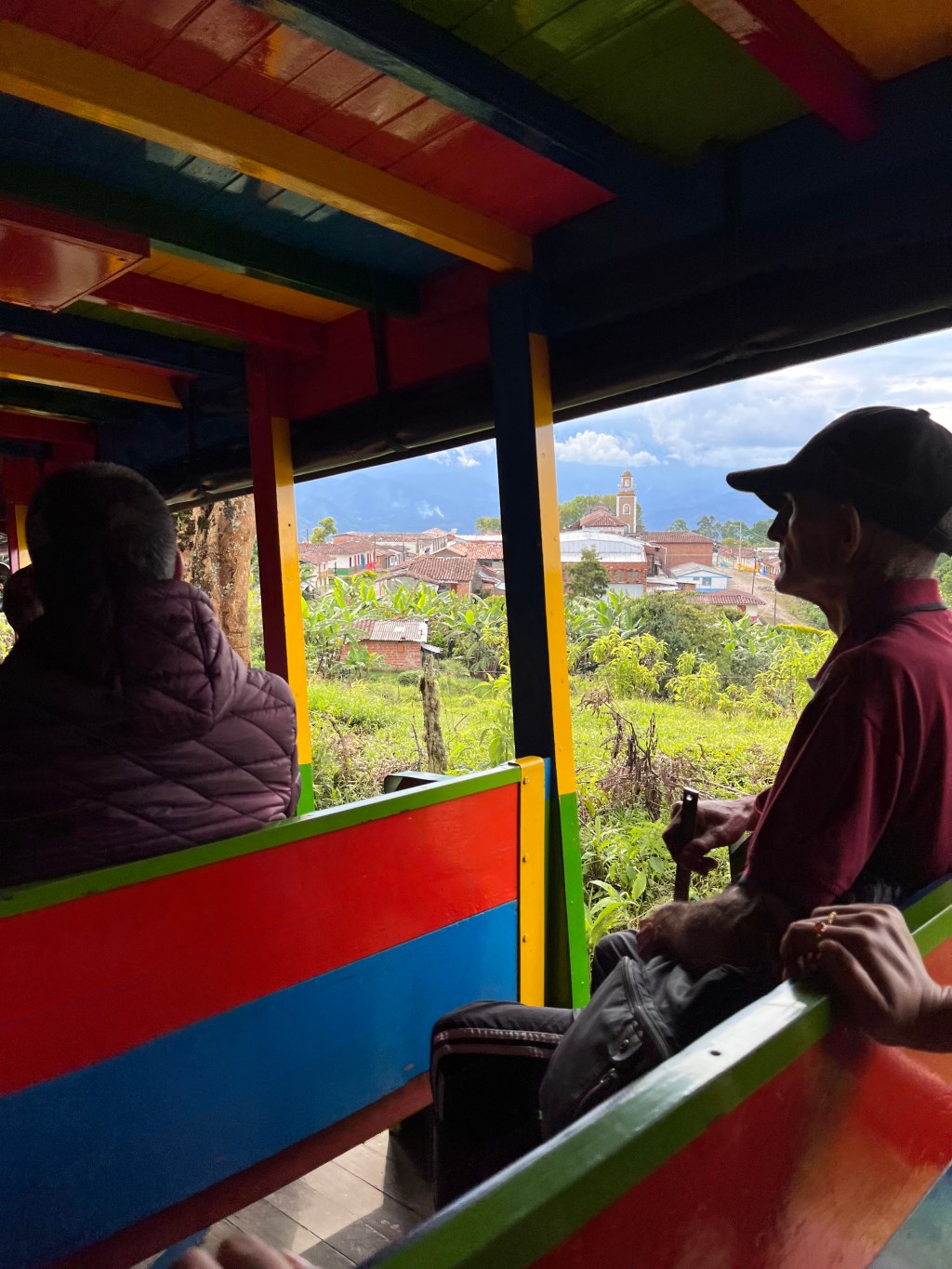
Out of all the modes of transportation you can choose from when traveling, the bus is undoubtedly the best form of transportation, hands down, no contest. It’s cheap, reliable, filled with locals, uncomplicated, and usually, moderately comfortable. Time can pass quickly on most buses if you allow it. A nap and a movie could eat away at half the time on the road. And usually, by the time you exhaust all possible forms of entertainment, your destination is reached not long after.
When compared to flights, they are cheaper, but with the additional benefit of the smaller carbon footprint, and most important of all, bragging rights to say that you traveled 1000+ kilometers without leaving solid ground. The views are also worth it, if you get a window seat at least.
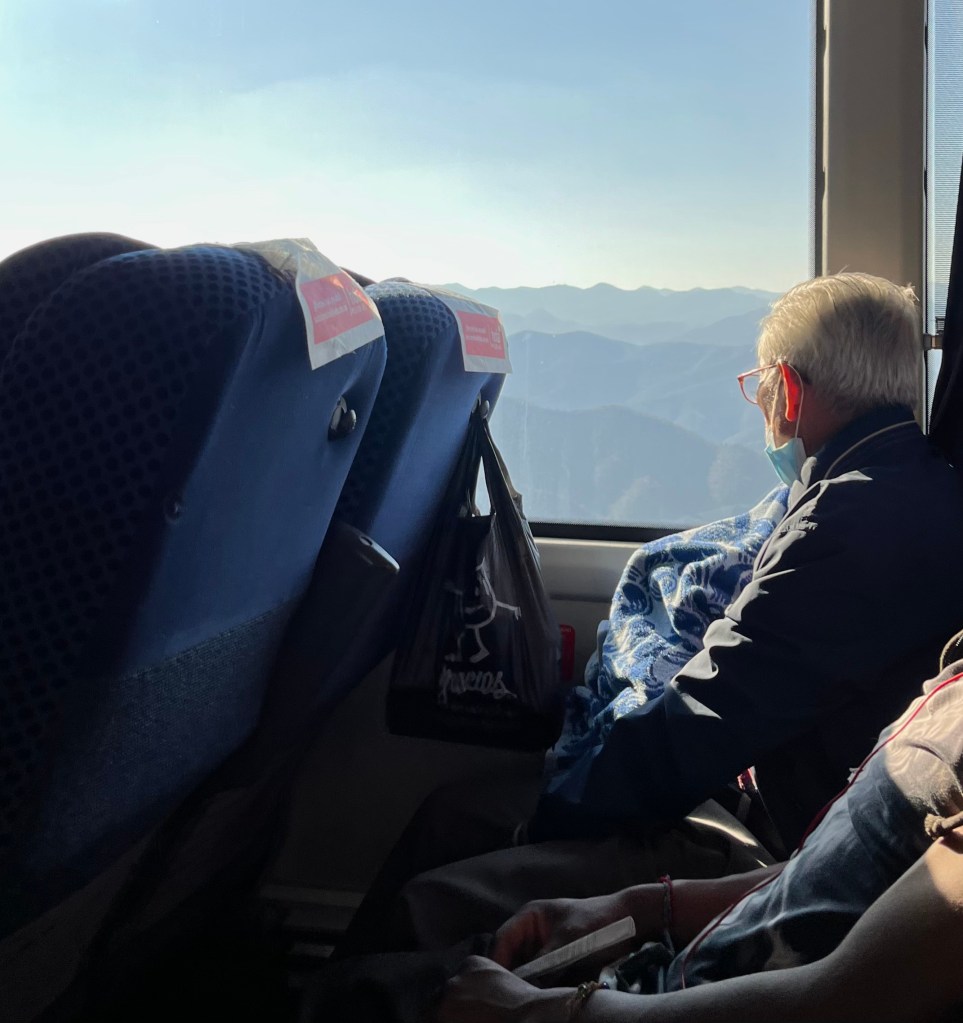
I don’t know where my obsession with this humble mode of transportation stemmed from. When I was younger, my fascination lay instead with airports and airplanes. I have distinct memories of desperately wanting a window seat on every flight that I could board, just to be able to see the plane slice through the clouds, and guess what the geographic features on the horizon were. The airport was equally as fascinating to my young eyes as the airplane was. I saw it as the gateway to the world, which it is, quite literally. Coming from a kid who couldn’t get enough of the San Antonio skyline, air travel was an upgrade.
It’s just as surprising then that I quickly outgrew my love of airports and airplanes with the speed I did. It may have happened sometime during my college years when I would fly to New York and San Diego to visit the friends who had escaped South Texas. The stress of getting to the airport at least 2 hours before a domestic flight, and at least 3 hours before an international flight, the need to get through security as fast as possible, the incredible levels of boredom and the slow passing of time as I waited at gates, which sometimes seemed more dull and painful than the actual flight itself. I hate the filing onto the plane, the filing off, the slow people, being crammed in the middle seat and playing some unspoken battle for the armrest, and the inability to sleep due to the almost 90-degree angle of the seats. Just thinking about it all hurts my neck.
It’s a long-winded way to say that I fell out of love with air travel. Interestingly enough, my fantasies surrounding the ideal way to travel began to focus on the bus —Something about its simplicity connected to my obsession with pursuing travel in its rawest form. Most of my decisions throughout my travels followed this ideal that was created in my head, following a vaguely defined, yet strictly followed philosophy of the “right” way to travel. In my mind, the overarching goal was to scrape by as cheaply as possible, eat local, speak the local language, and meet local people. This philosophy was the engine that pushed me along, and the little morsels of human interaction were the fuel to that engine, so to speak. Anything too high-brow, like a hotel (god forbid), was the antithesis to this philosophy. At that point, I may as well not even travel, I thought.
The idea of traveling exclusively by bus fit perfectly into my travel philosophy and fed into my ego’s desire to brag about the distances I could travel without opting for the easier option. It was only in hindsight that I was able to see the added benefits of opting for a bus seat over a plane ticket.
These supposed advantages of bus travel differ greatly per country, of course. In Mexico, for example, every bus I took from Mexico City to Oaxaca and east towards Chiapas played obnoxiously loud movies dubbed in Spanish, with the speakers alternating every other seat, located on the ceiling next to the extra cold air conditioning (which I liked). You were in for a long ride if you sat underneath one, and even more so if the movie was a Marvel superhero film with loud dialogue and explosions.
Oddly enough, Mexico was the only country that played movies out loud like this, and I’m thankful that this trend hasn’t caught on in other parts of the world. After all, if you want to spend time reading or taking a nap, there is no way to escape the loud dialogue blasting throughout the bus. Worst of all, when one movie ends, another one automatically begins. This continues until either your bus ride ends, or it nears midnight, and the bus driver finally shuts off the movies and turns off the lights.
In Central America, buses gave way to white vans known as colectivos. Riding in these vans, which sped through the countryside of most Central American countries, felt like experiencing what I imagine to be the most common form of transportation in the developing world. These colectivos traveled far too fast for the region’s poorly paved roads; hitting a pothole at 40 mph could send your head into the ceiling if you weren’t buckled in. Had I been prone to carsickness, I wouldn’t have been able to complete this stretch of the trip by land. Nevertheless, the drivers of these vans were incredibly skilled at navigating the chaotic roads.
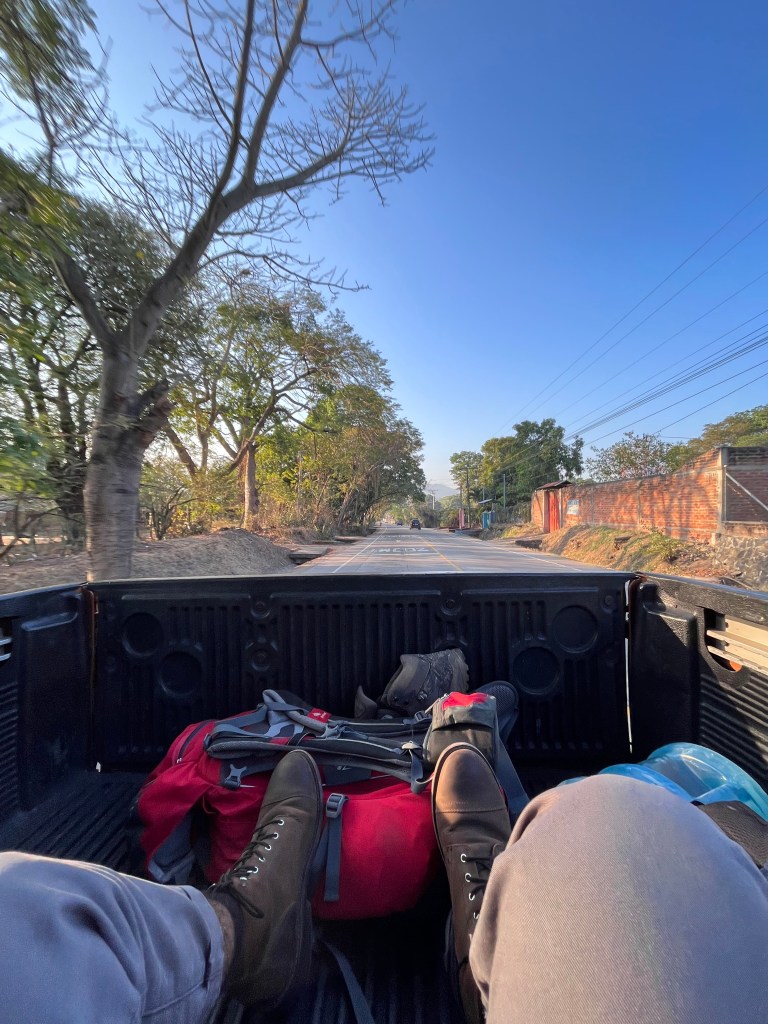
Flixbus was my bus of choice while I traveled through Western Europe. I knew what to expect; it was no frills and just perfect for me. The gold standard of transportation, as far as I’m concerned. You get your barcode scanned by the driver, you throw your bag in the compartment, and you are off. Granted, the charging ports inside the bus, located by each seat, never actually worked. In Europe, I’ve taken Flixbuses from Venice to Lisbon, and from Berlin to the Alps, and back through France before turning north towards Amsterdam. This must have been a combined distance of thousands of kilometers, although I’ve never taken the time to count exactly how much it all adds up to. I can always rely on FlixBus for a timely, comfortable trip that gives me the chance to catch up on my journal entries without having to worry about a bumpy ride.
As for the length of an average bus ride, it depends entirely on the travel style of the person booking the trip. Because I was adamant about taking buses throughout my journeys in Latin America, Europe, and Asia, I knowingly signed myself up for ten-hour rides of varying quality—often dictated by the vast distances I had to cover. I didn’t mind this at the time. The long hours gave me space to plan my next moves, listen to the songs that became my personal travel soundtrack, and simply reflect. Watching the landscape shift along the way was the cherry on top.
Besides, buses can also be luxurious. Arguably better than first class on most airlines, minus the food and drink. In Brazil, I took buses with huge, comfortable seats that resembled a reclining La-Z-Boy chair, with curtains on the windows, good restrooms on board, and air conditioning so cold you would forget you were traversing the Sertão.
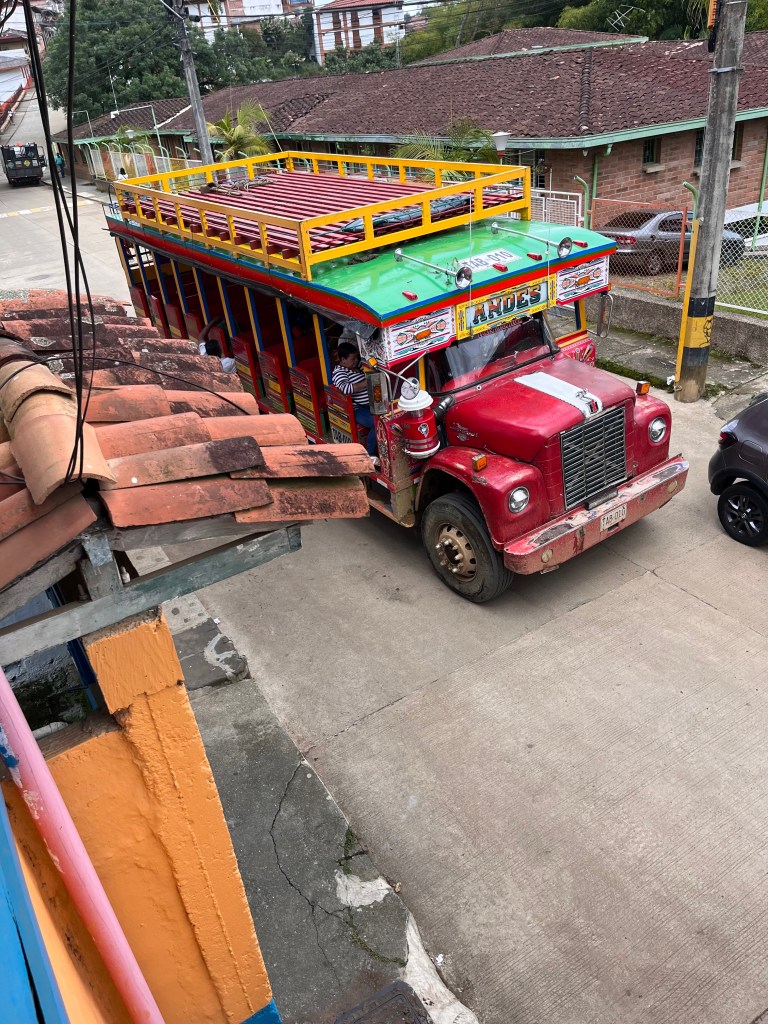
In East Asia, and in Vietnam specifically, there exist the best sleeper buses in the world where every passenger gets a capsule with a bed, with enough space for a full-grown man to lie down — including a pillow, a blanket, and great air conditioning. If you are lying down and turn your body towards the outside of the bus, you can enjoy the views of the countryside through the large windows covering your entire view, all while resting your head and snuggled under a warm blanket. Curtains can be drawn from both the window and the aisle side, and beds are stacked on top of each other on two levels.
There may be times when options are limited, though, and by the time you realize your mistake, you may be only an hour into a 15+ hour bus trip that you can’t get off of. These experiences are burned into my memory for the rest of my life. In the Southeast Asian country of Laos, I booked a sleeper bus from the capital of Vientiane, centrally located in the relatively small country, all the way to the city of Pakse, near the Cambodian border. The country runs vertically, with all main cities and roads running North-South. In this particular instance, I was taking a bus that traversed over half of the length in one go, a distance of about 670 Kilometers (416 miles). Solely counting the distance or time, this trip did not qualify as a top contender, but only through its sheer anxiety-inducing conditions does it discourage me from ever visiting the country of Laos again.
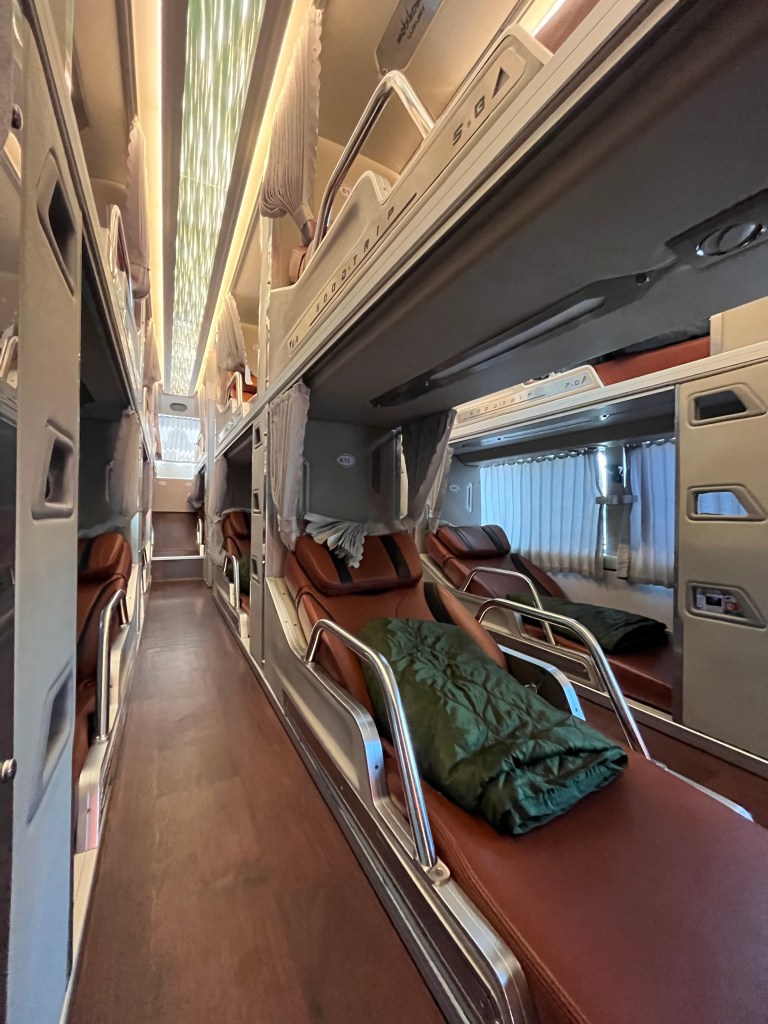
The bus was advertised as a sleeper bus, and I booked a seat, believing there to be individual capsules. Instead, there were twin beds stacked on metal bunk bed frames installed inside the bus. Odd, and extremely literal, but not too bad, I initially thought. Despite the unwashed sheets that had blood stains and food crumbs, I felt I could get past this. But as is common practice in Laos, if there is space in a bus, there will be people filling it. I was crammed on an upper-level twin bed with a Laotian man, around my age, who slept like a rock.
The national highway that serves as the main artery connecting the capital with all major cities is, for the most part, an unpaved dirt road with potholes big enough to fit a grown man inside. As a result, the bus rides were as such: either incredibly slow to minimize jerking for the passengers inside, or moving at a jogger’s pace, right over the potholes, causing the passengers to be lifted out of their seats for hours on end. I even began bleeding when I smacked into the ceiling after our driver hit a nasty pothole, but this was on a separate occasion somewhere north of the capital, Vientiane.
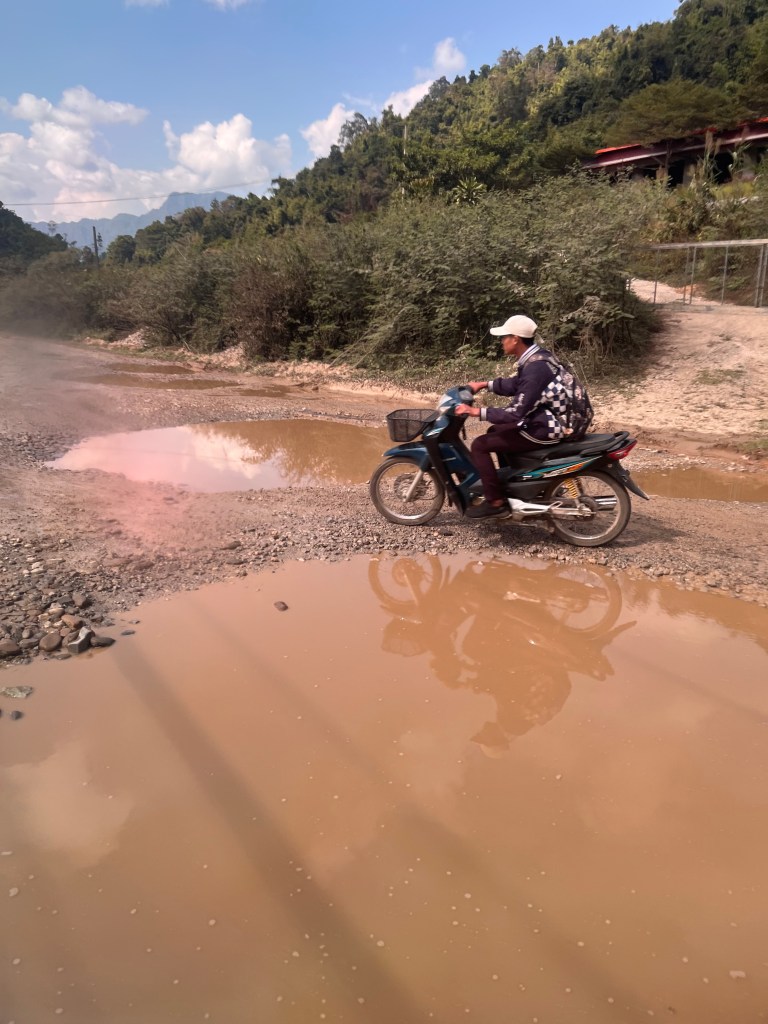
This 15-hour trip was the former, and as we inched along the highway, it was a hot bus full of people in all the beds and the single walkway that ran the length of the bus. The unceasing shaking kept me from sleeping through the situation. As hours passed, more locals began to shuffle on board, and before long, the walkway was covered with squatting families. Somewhere beyond the 8-hour mark, I began to get a bit panicked, realizing that there was no way to get out of this ordeal. In situations like these, the virtue of patience and taking it one step at a time take precedence. Needless to say, in this instance, I simply had to wait it out.
But in reality, this was only one out of the tens of bus trips I’ve been on that pushed me to the edge and made me want to throw in the towel and opt for a flight instead. The stories of my bus travels are so extensive that I struggled to choose which ones to write about, which is a great problem to have, in retrospect.
And despite all this, I’m still looking forward to catching another bus on my next trip to the Balkans this coming October. I just hope I’ll have another (good) story to tell when I come out on the other side.
 The Window Seat