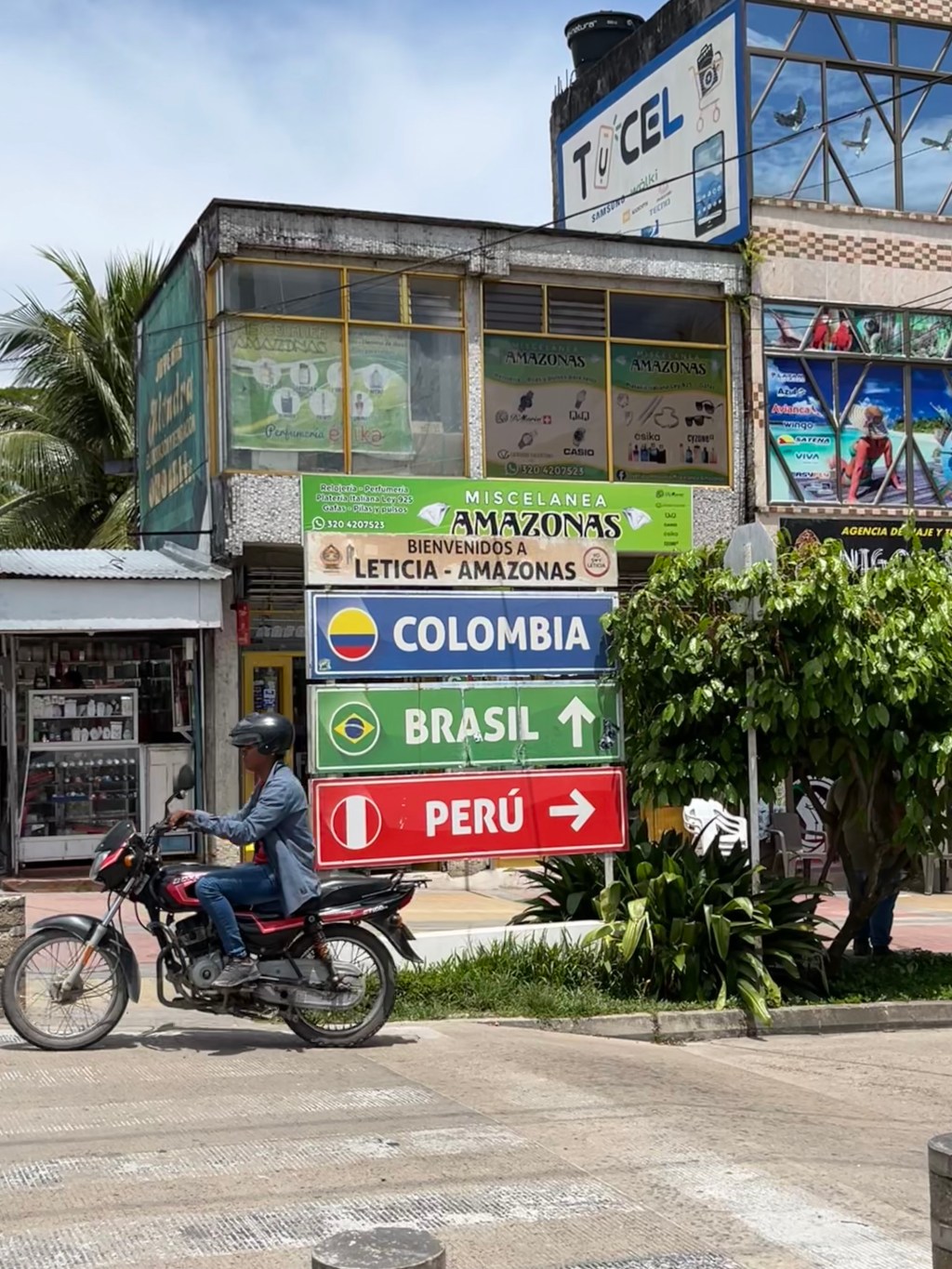
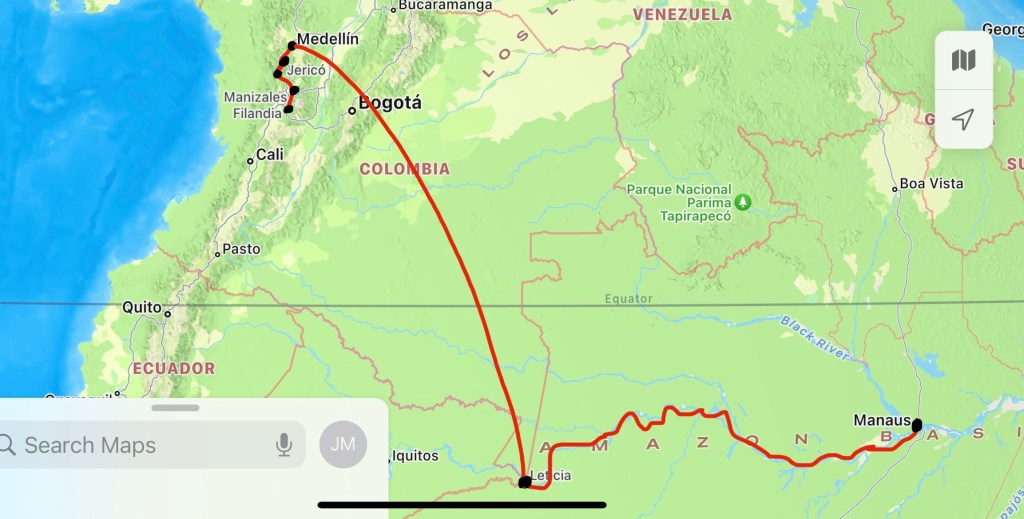
Upon deboarding the plane in Leticia, Colombia, I was greeted by an empty airport and a heavy blanket of humidity that made me want to remove all of my clothing on the spot. Leticia’s status as a city comes into question when compared to a well-known metropolis such as Medellin, but when you consider the rest of the settlements in the Amazon, Leticia shines like a beacon in a vast ocean of jungle. It is a city that is butted up against the legendary Amazon River and the Brazilian border town of Tabatinga. Across the river and a quick boat ride away is Peru, or rather, the small village of Santa Rosa de Yavari, located on an island in the middle of the second-largest river in the world.
I arrived in Leticia with the intended goal of getting a taste of what the Amazon had to offer, before I planned to continue my journey along the Amazon River towards the Brazilian city of Manaus, by way of a multi-day boat ride on a hammock ship.
Admittedly, I didn’t think much at first of the local cuisine that I would be eating, mostly for lack of knowledge, but that would quickly change.
After taking a tuk-tuk to my local accommodation, I realized that I would be sleeping in a 12-person dorm, thick with humidity, its rotating fans good for nothing but recirculating the hot jungle air around the room. In an attempt to look for food and a place to cool down, I wandered into downtown Leticia.
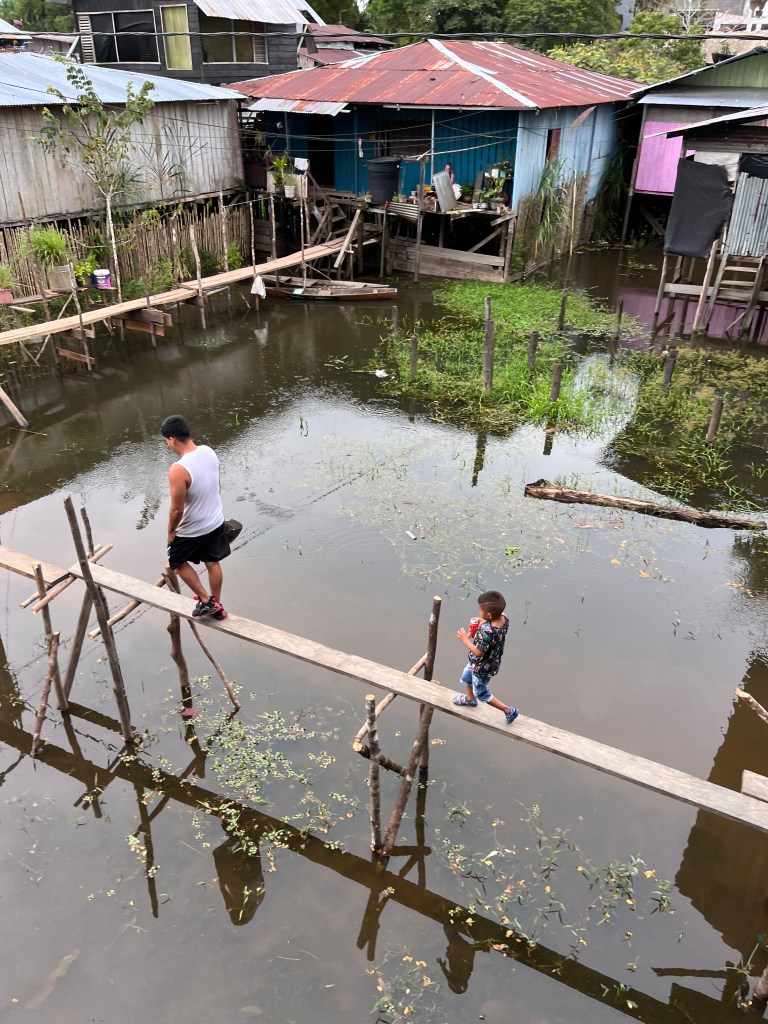
I flip-flopped around town in the oppressive jungle heat, trying my best to look like a local to avoid getting upcharged.
I found the city center to be quite nice, different than what my imagination had created from seeing the speck in the middle of the jungle.
I didn’t imagine a place with thatched roofs and village huts, but I also didn’t expect to enjoy the calm, relaxed attitude of the locals, and the variety of food I would find in the trendy eateries around town.
Imagine my surprise when I was confronted with menus in local restaurants that had words that I had never considered as food before — Copoazú, Pirarucu, Milpesos, Beiju, Cajú.
My time in the Amazon quickly turned into an unexpected lesson in a unique local cuisine, which I can bet is found nowhere else in the world.
Meals here are made up of completely different staples. The Amazonians have a taste for fried sticks of yucca, also known as cassava. They are dense and mildly flavored, similar to a boiled potato. They go well with something called salsa rosa— a cold cocktail sauce made of mayo and ketchup mixed together.
As common as ketchup is on an American table, so is a toasted and ground cassava flour called Fariña, which acts as a sort of savory and crunchy topping that can be sprinkled on top of any meal to add a deeper, toastier flavor.
Then, there was the Beiju, a prepared food that is also made of cassava flour, also known as tapioca, that can be made into flat crepe-like shapes. The beiju is exclusively customizable — stuffed with cheese, meat, or vegetables to become an incredibly delicious and chewy alternative to bread. There is no right or wrong when creating a new variation of fillings. I ate 3 of these in one serving, changing the filling each time.
I would spend my days walking, sweating out all of my fluids and electrolytes, and replenishing often with a smorgasbord of new foods.
Fruits, fish, and prepackaged convenience store snacks that I knew I had to try at least once.
This daily ritual continued for the first 48 hours in Leticia, before I decided to follow a friend’s recommendation and take a fast boat upriver to the Colombian village of Puerto Nariño.
I stuck my head out of the boat’s window the entire 2-hour ride to the village. The breeze allowed me to savor my first taste of cool air since I got off the airplane.
Upon debarking the boat, I did my usual routine, walked, and searched for a place to have a gastronomic experience.
During one of my walks, I came across a woman selling homemade ice cream out of her house. The menu of flavors was packed with a list of dozens of flavors that came across as indecipherable — Copoazú, Milpeso, camu camu, graviola, acerola, jabuticaba. All of the flavors came from local fruits, many of which are not found outside of the tropical climate of the Amazon.
I settled on trying the Copoazú ice cream (pronounced Coh-poh-ah-zoo), which would quickly become my favorite flavor of the bunch. The fruit itself is a large, round, and brown fruit that looks similar to a sweet potato on the exterior, with a creamy yellow flesh that has a strong flavor reminiscent of a mix of pineapple, banana, and jackfruit.
It also became a self-imposed custom to order a new fruit juice every time I stopped at a local restaurant. Acerola’s red pulp and skin made a great sour juice, similar to that of cherries. Graviola, known in English as soursop, is a creamier and sweeter alternative to Acerola’s sour flavor. Cajú, or Cashew fruit, is one of my personal favorites. The fruit that hosts the cashew nut that we eat actually tastes sour, sweet, and slightly astringent, somewhat like a persimmon. It makes a great juice, too.
As for the local protein, apart from rubbery chicken and the occasional piece of tough, overcooked beef filet, fish was the protein of choice for the locals.
The Amazon River provided an abundance of equally strange and fascinating menu options.
I became fond of the local delicacy, Pirarucu. It is a giant air-breathing fish that is filleted into boneless steaks and cooked as an incredibly versatile white meat that’s somewhere in between a cod and a halibut.
The fish itself is huge, one of the largest freshwater fish in the world that can grow to be over 10 feet in size, from mouth to tail fin.
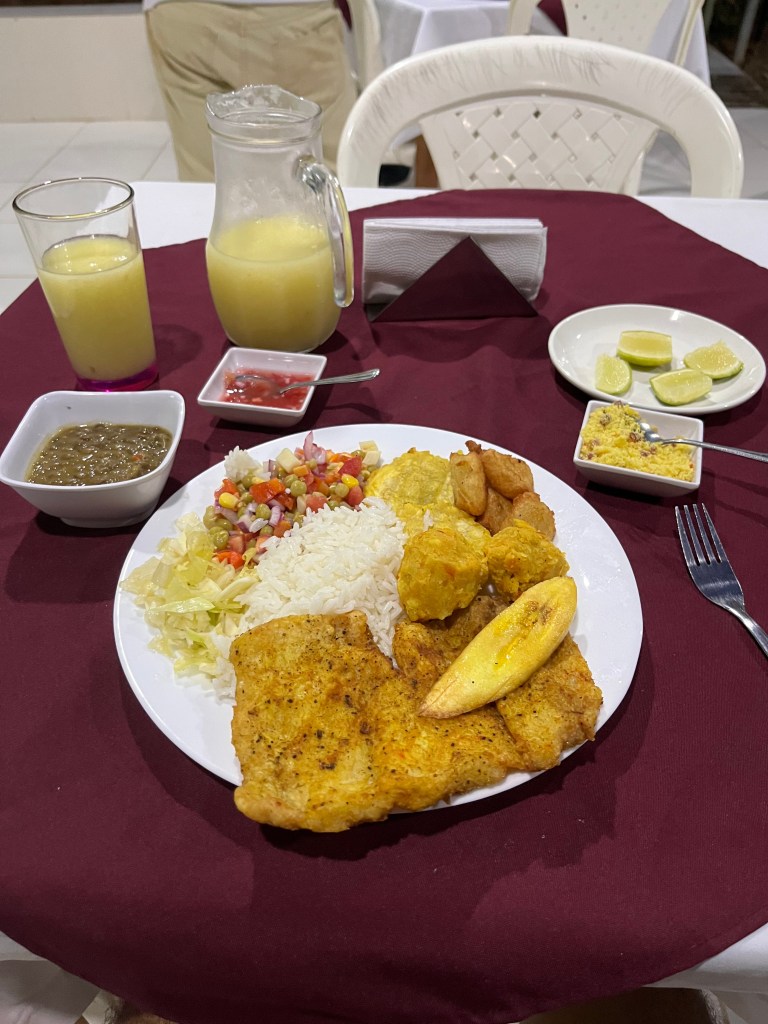
I first tried it on one of my last nights in Puerto Nariño, while I was recovering from a high fever in the only hotel that had air-conditioning in the village. The owner of the hotel cooked dinner every night for the guests, serving the food family style, alongside a hefty side of unceasing Spanish conversation. It was on this night that he served a nice filet of breaded, pan-fried Pirarucu with plantains and yucca and a pitcher of Copoazú juice to wash it all down.
It was a simple but delicious meal; a great way to round out my fairly uneventful visit to the small Amazonian village, where I ended up more preoccupied with regaining my strength, rather than jungle excursions.
Once my fever broke, I felt ashamed of the fact that I might not have been cut out for jungle life. At this point, I still had not experienced the rugged jungle life as I had imagined it would be.
Time was of the essence, and I decided to continue my journey eastwards by reserving a spot on a hammock boat that would take my downsteam towards Manaus, Brazil.
My attention span can sometimes be short, and I was more eager than anything else to get to Brazil, so I could trade my Spanish for Portuguese.
I prepared all the necessary arrangements — buying a spot on the boat, buying a hammock, utensils, and bowls for food.
Within the span of 48 hours, I took the speedboat back to Leticia, called my parents, letting them know they wouldn’t be hearing from me for the next 72 hours at least, given the lack of signal in the world’s largest rainforest, and I boarded the boat early one morning, shaking off Colombia, the Spanish language, and the stagnant jungle air.
Then, I just had to reckon with the chewy chicken soup and the cold, dry spaghetti noodles they served us every day on the boat, for lunch and dinner.
Now, whenever I arrive at a new destination, it has become a ritual of mine to first make sure that I am checked into my accommodation, followed by an immediate search for a good place to eat.
But I truly believe that the habit has a good reason behind it.
I’ve since recognized the importance of the cultural medium that food offers when attempting to experience a new physical space. It may be more than just an ice cream flavor, and it might just tell a story of the history and identity of the local inhabitants that some might believe can only be properly experienced through other mediums, such as language or cultural festivities: It’s an opportunity to learn about the place you are visiting without having to struggle through translator apps and social cues. After all, we all can appreciate good food for what it is.
My unexpected schooling in Amazonian gastronomy remains a highlight of my short stint in the jungle, and I aim to go back with the sole purpose of getting my hands on a Copoazú once more.
 The Window Seat
Leave a comment